hanip.me
Songpyeon
송편
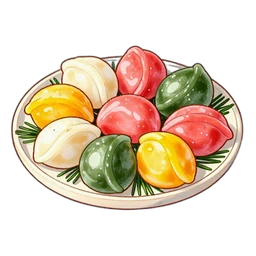
Steamed rice cakes with sesame, bean or chestnut fillings, bringing together a chewy wrapper and the flavors of Chuseok.
Before the first bite
- Spice
- Not spicy
- Texture
- Chewy
Varies by restaurantWrapper color does not identify the filling. Check which seeds, beans or chestnuts are inside and whether honey or sugar is added.
Taste and texture
Songpyeon encloses a filling in rice dough and is then steamed. Small crescents are familiar, but ingredients and shapes vary, and making and sharing the cakes is part of Chuseok. In the basic method, the filled cakes are shaped before they go into the steamer.
The traditional wrapper uses nonglutinous rice flour, not sweet or glutinous rice flour. Hot-water kneading makes it workable. The Academy of Korean Studies defines songpyeon this way; a chewy texture alone does not make it the same dough as glutinous-rice cakes. The wrapper is sealed around its filling rather than risen like bread.
Its precise beginning is uncertain. Similar cakes in old writings have been interpreted as earlier forms, but this does not establish an exact invention date. The encyclopedia cites Dongguksesigi's account of using newly harvested rice for Chuseok songpyeon and ancestral rites. Sharing food made from the new harvest helps explain the cake's seasonal significance.
Pine needles traditionally add fragrance during steaming; they are not the filling. Some methods remove the needles and lightly coat the cooked cakes in sesame oil, so a glossy surface does not mean deep-frying. Modern home recipes also allow steamer liners without pine needles.
MCST describes regional examples including pumpkin songpyeon in Chungcheong, potato versions in Gangwon and ramie versions in Jeolla. Jeju's pea-filled cakes may be flat and round. Regional names reflect ingredients and shapes, not an identical recipe at every shop.
The wrapper's springiness comes first, followed by the filling. Sesame versions may combine roasted seeds with sugar or honey, with small grains left to chew. Bean, red-bean and chestnut fillings offer different aromas and textures. Thinking about wrapper and filling separately helps describe your preference.
Wrapper color is a separate choice. Mugwort can make green dough, while pumpkin or fruit can supply other colors. Color alone does not reveal what is inside. Read the ingredients rather than inferring the filling from a photograph.
Texture also depends on flour moisture, wrapper thickness and shaping. Korean Bapsang uses wet nonglutinous rice flour and describes a separate adaptation for dry flour. Similar names on flour packets therefore do not guarantee the same result with the same amount of water. That recipe also mixes in some glutinous rice flour to soften its dry-flour adaptation. Distinguish the traditional base from adaptations for different available ingredients.
Sweetness depends on the filling mixture. Sesame-and-sweetener versions differ from bean-centered ones. Sesame oil on the surface, rice dough and filling contribute distinct flavors. Asking about added honey or sugar is more useful than choosing by color when you prefer less sweetness.
When it may suit the table
- It suits a small taste of Chuseok. Enjoy one filling or compare several while sharing. The tradition of making the cakes together offers a natural starting point for talking about their shapes and ingredients.
- Choose it when you want springy rice dough rather than a crisp cookie. Decide whether you prefer sweet sesame or a bean or chestnut filling, narrowing your choice within the songpyeon family.
When another path may fit better
- Steamed songpyeon may not suit a craving for a crisp crust or crumbly cookie. Its rice wrapper and filling are chewed together; sweetness does not make its texture like a baked snack.
- When avoiding an ingredient, do not choose by appearance alone. Seeds, beans, chestnuts and sweeteners vary. Check the actual product ingredients or ask the seller; choose something with a clear composition when the filling cannot be confirmed.
How to order it in Korea
- Ask whether the filling is sesame or beans, and what an assorted pack contains. Mugwort or pumpkin in the name can describe the wrapper rather than what is inside.
- Check whether the cakes are ready to eat or need steaming. Shaping and cooking are separate stages. Follow the seller's product instructions rather than assuming a glossy photograph shows a cooked cake.
Show the Korean nameName and a short phrase
Use this to point out the food or say its name. Check the food-specific ordering tips above first.
송편
Save, share or print an image
More guides in this category
Checked sources
Reviewed 2026-09-24 · Next check 2027-03-24