hanip.me
Yakgwa
약과
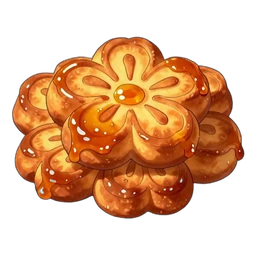
A traditional Korean confection of wheat dough kneaded with sesame oil, honey and rice wine, fried, then dipped in honey.
Before the first bite
- Spice
- Not spicy
- Texture
- Soft
- Serving
- Individual or shared
Varies by restaurantBy size it's grouped into dae-yakgwa, jung-yakgwa and so-yakgwa, and square-cut moyakgwa and mold-pressed dasikgwa are separate types. For dietary restrictions or allergies, ask the restaurant whether the food contains your trigger ingredients.
Taste and texture
Yakgwa is a Korean confection made by shaping wheat-flour dough, frying it, and letting honey or another sweet syrup soak in. Korea Tourism Organization describes it as a sweet, nutty treat also enjoyed at holiday meals and celebrations. Sweetness and moisture enter the fried dough rather than remaining as powdered sugar on top. Its sheen and moist interior develop through the syrup stage after frying.
Aromatics accompany the flour and oil. A Korean Traditional Knowledge Portal example uses sesame oil, honey, ginger juice, and clear rice wine. Maangchi adds cinnamon to flour coated with sesame and cooking oils, then incorporates a separate mixture with honey, ginger juice, and soju. Sesame's roasted character and ginger or cinnamon sit beneath the sweetness, giving it a more varied aroma than sugar alone.
An important preparation step distributes oil through the flour first. Maangchi lightly rubs out oily lumps and sifts the mixture before gradually adding the honey-and-spirit liquid. The dough is gathered and shaped rather than kneaded extensively like noodles. Korean Traditional Knowledge Portal also advises against forceful kneading and emphasizes a tender, separating grain that holds syrup.
The dough can be pressed into a mold or rolled and cut. Maangchi folds and rolls it to create layers and cuts squares or flower shapes. An Australian SBS Food example cuts diamonds. Rounded flower edges and angular pieces offer different edges and bite sizes even within the same confection.
Frying cooks the dough and develops its color. Maangchi and SBS Food give two-stage examples, first using lower heat and then hotter oil for browning. Maangchi explains that the layers gradually expand during the first stage. Those spaces later admit syrup, making the finished soaked confection texturally different from the freshly fried dough.
The soaking liquid varies too. Korean Traditional Knowledge Portal gives a sugar, water, and cinnamon syrup; Maangchi uses rice or corn syrup with water, sugar, and ginger juice. SBS Food combines honey, rice malt syrup, and ginger. Honey can be used in the dough while a different syrup is absorbed afterward, so the sweetness need not come from one kind of honey alone.
The surface is glossy and may feel sticky. A bite releases fried-dough richness together with absorbed syrup. Although it can look firm, the center may soften moistly as you chew. It is closer to slowly eating syrup-filled layers than snapping a thin, dry cookie into crumbs.
Layered yakgwa can show distinct folds across a cut face. Maangchi describes syrup entering those spaces and giving a juicy bite. Compact areas and opened layers break differently. Some pieces have a firmer edge followed by a softer middle, so thickness and shape affect the eating experience.
Sesame oil gives a roasted foundation. Ginger juice or sliced ginger in the syrup adds a gently pungent aroma, while cinnamon contributes sweet fragrance. These ingredients layer aromas over concentrated sweetness rather than supplying chili-style heat. Different proportions of honey and rice syrup also change aroma and stickiness.
Garnishes add small textures apart from the dough. Korean Traditional Knowledge Portal sprinkles ground pine nuts; Maangchi suggests pumpkin seeds, pine nuts, or fine ginger threads. SBS Food uses chopped pine nuts and toasted sesame seeds. On the moist cookie, these additions offer a more distinct nutty or ginger note than the soft, sweet center.
For small amounts of concentrated sweetness, divide a piece and have it with tea or coffee, a pairing also suggested by Maangchi. An unsweetened drink lets you taste the cookie without adding more sugar. Yakgwa is finished by allowing syrup to soak in, rather than being hurried to the table only for freshly fried crispness, which explains its moist character.
When it may suit the table
- It suits a pause with small bites of a sweet, nutty confection, especially if you enjoy tender pastry soaked in syrup alongside tea.
- It can suit sharing small portions of a Korean confection. For a gift, check piece size and individual wrapping to find a convenient arrangement.
When another path may fit better
- Another snack may suit you when concentrated syrup sweetness or stickiness does not appeal. Yakgwa's sweetness reaches inside the dough as well as its surface.
- If you want something hot and crisp straight from the fryer, another fried snack may fit better. Yakgwa goes through a syrup-soaking stage after frying.
How to order it in Korea
- Look for “yakgwa” on the display or menu, then check the size — large, medium or small — and shapes such as square-cut moyakgwa.
- If taking it away, ask the seller how to store it and when to eat it.
Show the Korean nameName and a short phrase
Use this to point out the food or say its name. Check the food-specific ordering tips above first.
약과
Save, share or print an image
More guides in this category
Checked sources
Reviewed 2026-08-25 · Next check 2027-04-21