hanip.me
Butter tteok
버터떡
A chewy baked dessert made with glutinous rice flour and butter.
Before the first bite
- Spice
- Not spicy
- Texture
- Crisp · Chewy
Varies by restaurantThe batter and baking method change the texture.
Taste and texture
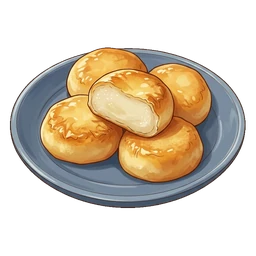
Butter tteok is a baked snack made with a glutinous-rice-flour-based batter and butter. Its defining contrast is a fragrant, crisp exterior and a chewy rice-cake-like center. Recipes containing milk and egg may have a yellowish color. Rather than steamed rice cake simply topped with butter, it is a baked dessert in which butter cooks together with the batter.
Other flours and starches also affect the texture. Smallhealing’s version includes tapioca starch; Ohana Kitchen’s includes both tapioca and potato starch. Since the powders cook with milk and other liquids, the finished elasticity depends on the whole formula. The name does not necessarily mean it is made from glutinous rice alone.
Butter mixed into the batter has a different role from butter brushed into the mold. The former adds dairy flavor throughout, while the latter affects the surface in contact with the mold. Some versions use muffin molds and others shallow pans. Nunhi reports that a shallow mold emphasized the crisp outside and reduced the proportion of chewy center.
A long butter-bar-style variation also exists. Bakeplus places a prebaked sablé base under glutinous-rice batter. The sablé uses wheat flour and almond flour, while the upper batter includes coconut milk and dairy milk. Unlike a small cake made from one batter throughout, it has a distinct crisp base and chewy upper layer.
Other flavors can be added to the buttery base. Bakeplus introduces green-tea-powder and cocoa variations, adding tea or chocolate notes to the butter. Starting with plain lets you explore the exterior and center before comparing other flavors. Since butter tteok covers several formulas, look at both the shape and the ingredients.
The surface breaks first, followed by the elastic center. A crisp sound and a stretchy resistance can appear in the same bite. It does not scatter into many thin layers like a croissant or crumble softly throughout like sponge cake. Whether you enjoy that chewy center is a major part of deciding if it suits you.
Butter aroma may be especially noticeable at the baked surface. Milk and butter provide mellow flavor, with sweetness from sugar. Bakeplus’s use of browned butter is one way to deepen the aroma. Since not every product uses that process, compare buttery intensity separately from how darkly the surface is baked.
Baking the exterior evenly matters too. Smallhealing removes the cakes from their molds, turns them over and bakes them again, exposing the bottom to additional heat rather than coloring only the top. Breaking a piece in half shows the balance between thin crust and moist center, helping compare differently shaped products.
The texture can change as it cools. Ohana Kitchen cools the cakes on a rack to establish the exterior and center textures. Nunhi reports different firmness and moisture after cooling depending on the flour blend. Check the product’s serving instructions according to whether you will eat it immediately or later, rather than judging packaged texture solely from a warm piece.
A sablé base adds a second kind of baked texture: crumbly nuttiness below and the cohesive chew of rice batter above. Plain versions without cream or bean-paste filling let you focus on the batter’s sweetness and butter aroma. A less sweet drink can be useful for comparison instead of pairing it with another very sweet item.
When it may suit the table
- It suits a craving for both baked richness and rice-cake chew. Start with plain if you prefer buttery batter to bean or cream filling. Small molded pieces have a relatively large exterior, making the two textures easy to compare in one piece.
When another path may fit better
- Its elasticity may feel unfamiliar if you expect fluffy bread that breaks apart easily. Some variants have a base containing wheat or almond flour, so check the label if you avoid particular ingredients. Milk and egg may also be included.
How to order it in Korea
- Check both the individual size and number in a bakery pack. Some recipes include milk and eggs, so the name rice cake does not mean only rice and butter were used. Photos showing the exterior and center can also help you judge the texture.
Show the Korean nameName and a short phrase
Use this to point out the food or say its name. Check the food-specific ordering tips above first.
버터떡
Save, share or print an image
More guides in this category
Checked sources
Reviewed 2026-09-06 · Next check 2027-03-06