hanip.me
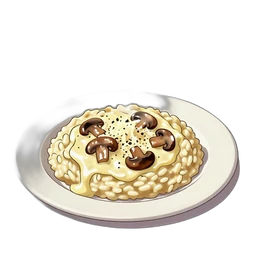
Creamy risotto
크림 리조또
An Italian rice dish cooked with broth and constant stirring until it turns creamy.
Before the first bite
- Spice
- Not spicy
- Texture
- Soft · Sticky glaze
- Serving
- Usually individual
Varies by restaurantThe broth may be meat, fish or vegetable, and the rice variety and add-ins differ by kitchen. For dietary restrictions or allergies, ask the restaurant whether the food contains your trigger ingredients.
Taste and texture
Risotto is an Italian rice dish cooked by gradually adding broth and stirring. Starchy rice such as Arborio is used, often finished with butter or cheese. Its creamy texture comes from rice starch mixing with the broth as well as any cream, so for cream risotto check both whether cream is added and the main ingredients, such as mushrooms or seafood.
Risotto rice such as Arborio or Carnaroli absorbs stock and releases starch that thickens the surrounding liquid. This method adds the rice unwashed to preserve that starch, developing grain texture and sauce together rather than topping separately cooked rice. The grains swell and soften while retaining a little central bite alongside the creamy liquid.
Finely chopped onion is softened in butter or olive oil; white-risotto recipes may also use celery and garlic without deep browning. Rice is stirred in to coat the grains, whose edges become translucent. Some versions cook in white wine before adding stock, contributing aroma and acidity. Aromatics, absorbed broth and finishing dairy build successive layers of flavour.
Warm stock is added in stages as earlier liquid is absorbed, with stirring to prevent sticking while keeping the grains intact. Vegetable, chicken and fish stocks carry different flavours into the rice. Matching stock to the main ingredient extends its character beyond the garnish into the grains. Liquid additions and the rice’s degree of cooking are managed together.
Mushroom risotto may combine separately sautéed mushrooms with nearly cooked rice. Cleaned, sliced porcini browned in garlic-scented oil develops toasted notes while retaining pieces to bite. Dried mushrooms can instead contribute their soaking liquid to the stock, carrying aroma throughout the rice. Fresh pieces and dried-mushroom broth build different foundations before cream is added.
Prawn or scampi risotto can use flesh and shells separately. Heads and shells are sautéed with aromatics, simmered and strained to make stock. Cooked flesh may remain in pieces or be blended with broth: the purée distributes seafood flavour while reserved pieces retain texture. Cream can enrich this base, with lemon zest or parsley as finishing accents.
In an asparagus-and-prawn variation, cooked stems are blended with cooking water while the tips are reserved. The green purée cooks with onion and rice; separately sautéed prawns and tips are added at the end. Stems become part of the sauce and tips remain as distinct pieces, giving one vegetable two textures. Cream cheese or cream adds dairy richness to the purée-based softness.
The outside is smooth and creamy with starch and broth, while the grains retain a bite at the center. This differs from fully softened rice porridge or relatively dry fried rice. Butter and cheese add richness and saltiness, while the broth and other ingredients determine flavors such as seafood or mushrooms.
The finishing step called mantecatura often mixes butter and grated cheese into the rice off the heat, smoothing its texture and adding dairy aroma. Other recipes finish with cream or soft cream cheese. Liquid cream blends in directly, while cream cheese is worked through for richer dairy flavour, both supplementing the starch-and-stock base. Aged Parmesan adds salty, pronounced cheese character.
The sauce can link the grains while leaving their outlines visible. Warm stock loosens an overly thick risotto; adding more cream is not the only adjustment. Prolonged cooking softens the centre further and can make the dish heavy. Its finished texture is apparent in grains moving with creamy liquid on the spoon while still offering a little bite.
When it may suit the table
- You want one warm, rich bowl
- You want an Italian dish built on rice rather than pasta
When another path may fit better
- You need to avoid butter and cheese
- You want something lighter and plainer
How to order it in Korea
- Find the risotto section on the menu and check which add-ins, such as mushroom or seafood, it uses.
- The grains are meant to keep a firm bite, so say up front if you would rather have the rice fully soft.
Show the Korean nameName and a short phrase
Use this to point out the food or say its name. Check the food-specific ordering tips above first.
크림 리조또
Save, share or print an image
More guides in this category
Checked sources
Reviewed 2026-09-13 · Next check 2027-03-10