hanip.me
Rosé pasta
로제 파스타
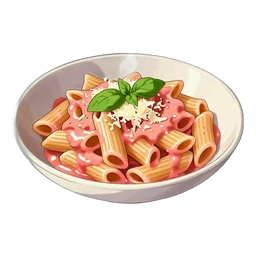
Pasta tossed in rosé sauce, a pink blend of tomato sauce and cream sauce.
Before the first bite
- Spice
- Varies with sauce
- Texture
- Soft · Chewy
- Serving
- Usually individual
Varies by restaurantThe tomato-to-cream ratio and whether gochujang goes in change the colour and heat from kitchen to kitchen. For dietary restrictions or allergies, ask the restaurant whether the food contains your trigger ingredients.
Taste and texture
Rose pasta combines noodles with a tomato-and-cream sauce. Some versions add spicy seasoning.
Tomato form affects smoothness. Strained tomato passata makes a sauce with few pieces; chopped or crushed tomatoes leave pulp and can be reduced before cream is added. Concentrated tomato paste may reinforce purée’s flavour and colour, retaining a strong tomato base after cream lightens it. This helps explain chunky and smooth versions of rosé sauce.
Onion and garlic are softened in oil before tomatoes and then cream are added. In a bacon variation, onion cooks with bacon so rendered fat and smoky flavour enter the sauce from the start, rather than only as a garnish. These early aromatics shape the flavour beneath the cream, and small pieces mix readily with the pasta.
Pasta is boiled separately in salted water, reserving some cooking liquid to loosen the sauce when tossing. Tubes and ridges of penne hold sauce differently from long spaghetti strands; shells and spirals offer other shapes. Allowing for the final time in the sauce helps retain a little bite rather than over-softening the pasta.
Shrimp or chicken may be cooked separately and returned with the pasta; cut or shredded chicken contributes discernible meat fibres while whole shrimp retains its curved, springy shape. Chopped bacon, mushrooms or peppers can cook with the onion. Tender spinach is folded in later. Different addition times preserve the distinct textures of meat, mushroom pieces and soft leaves.
Another version roasts halved cherry tomatoes with oil and seasoning before combining them with softened onion and cream. Some of the softened, lightly charred tomatoes are crushed with a spoon; others remain as pieces, preserving visible skin and pulp unlike strained purée. This recipe uses red-lentil penne, illustrating that the pasta material can also vary.
A Korean-style spicy variation combines gochujang and tomato paste with a creamy base. FOODPOLIS presents a plant-based example blending soaked cashews with unsweetened soy milk, combined with sautéed onion, garlic and gochujang; nutritional yeast can add cheese-like flavour. Gochujang contributes heat, sweetness and umami, while dairy versus nut-and-soy cream changes the base.
Penne alla vodka is a related tomato-and-cream pasta. One recipe cooks onion, garlic, tomato paste and chili before adding vodka and then cream. Penne is tossed with sauce and pasta water, with grated cheese added off the heat. Its shared pink appearance accompanies a distinct vodka step, illustrating how alcohol, chili and cheese can alter a tomato-cream base.
Tomato acidity and creamy richness meet in one sauce. Cream adds a mellow flavor compared with tomato sauce alone, while the tomato supplies tang absent from a cream-only pasta. The proportions determine whether the tomato or cream is more prominent.
Cream is blended gently over low heat; vigorous boiling can split the sauce. Cream with milk, or milk enriched with butter, gives different dairy richness. Grated Parmesan adds salty cheese flavour and body. Tomato purée itself also thickens the base, so the finished consistency depends on tomato concentration, dairy and cheese together.
When it may suit the table
- You cannot decide between tomato and cream
- You want a sauce that is creamy and a little spicy
When another path may fit better
- You want a lighter, plainer sauce
- You need to avoid dairy or spice
How to order it in Korea
- Menus often list it simply as “rosé”, so check that it means the tomato-and-cream blend.
- A pink sauce does not guarantee a mild dish. Some rose pastas include spicy seasonings such as gochujang or chili. For a mild tomato-and-cream flavor, ask which spicy seasonings are used and whether they can be omitted or reduced.
Show the Korean nameName and a short phrase
Use this to point out the food or say its name. Check the food-specific ordering tips above first.
로제 파스타
Save, share or print an image
More guides in this category
Checked sources
Reviewed 2026-09-13 · Next check 2027-03-17