hanip.me
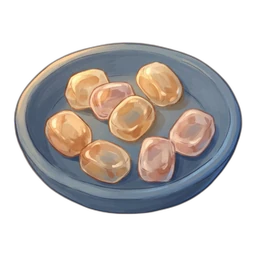
Hard candy
사탕
Sugar and syrup are boiled and shaped into a firm sweet that slowly dissolves.
Before the first bite
- Spice
- Not spicy
- Texture
- Crisp
Varies by restaurantMilk or fruit flavors, shapes and fillings vary by product.
How to order it in Korea
- Decide whether you want fruit flavors or a creamy or buttery taste, and specify hard candy if you want a firm sweet that dissolves. LOTTE Wellfood distinguishes hard candy from caramel and other confectionery, so consider texture as well as flavor. Ask for a lollipop if you want a sweet on a stick, and check the name and flavors for bagged candy.
- For online orders, check the flavors and package size together. The Korean official shop's product list distinguishes different weights of Scotch Three Flavors and lollipop multipacks. Even when names are similar, read the weight and piece count, then choose for the people sharing and the form you want. Check the specific label when an ingredient matters.
When it may suit the table
- Candy suits a small White Day gift. Choose a known favorite flavor or an identifiable assortment when preferences vary. With a short card, focus on the thought behind your choice rather than the size of the package.
- For sharing individual treats with a group, check how the contents are packaged. A large outer bag does not tell you whether the pieces are individually wrapped or which flavors it contains. Keep the flavors identifiable if recipients will choose their own.
When another path may fit better
- For a crunchy snack, compare chocolate biscuit sticks. For a smooth mixture of cream and chocolate, consider nama chocolate. Thinking about whether you want crunch, softness or a firm sweet that gradually dissolves can help narrow the choice.
- If you are choosing food because you are hungry for a meal, decide on the meal first. Candy works as an occasion treat or a small sweet afterward. For a gift, ask about preferred flavors rather than choosing solely by color or packaging, particularly for distinctive flavors such as mint.
At the restaurant
- When sharing fruit-flavored candy, creamy sweets and lollipops, keep their names and flavors identifiable. The Korean official shop also lists these under distinct names and package sizes. If dividing them into smaller bags, retain the original product information. Check each package's storage directions and distinguish opened packs from unopened ones.
Taste and texture
About the dish
The candy described here is hard candy: a sweet made by boiling a sugar-based mixture and allowing it to set firmly. Sugar is dissolved with water and ingredients such as glucose syrup, then heated to reduce the moisture before shaping. Added ingredients can provide milk, honey, fruit or mint flavors. Shapes range from small individual sweets to lollipops.
Candy is also a broad term covering other confections, so distinguish firm sweets from softer, chewy products. Even caramel-flavored sweets can come in hard and soft forms. Read the flavor and form together to choose between a sweet that gradually dissolves and one intended for chewing.
Sweets can be shaped by cutting the cooling mixture, pressing or molding it. Hard and soft sugar confections differ in the moisture retained during cooking. When shape and flavor names look similar, read whether the product is firm and slowly dissolving or soft and chewy.
Taste and texture
Hard candy releases sweetness and aroma as it slowly dissolves. A fruit-flavored sweet offers a different experience from one containing cream or butter. Creamy caramel candies emphasize those richer flavors, while fruit varieties highlight their named aromas. Use the flavor description rather than color alone.
For an assorted bag, think about whether you want a familiar flavor or several different ones. Check the ingredients when seeking a creamy taste and the assortment list when seeking a particular fruit flavor. A sweet with a filling may also change in character as you reach its center.
More guides in this category
Checked sources
Reviewed 2026-10-30 · Next check 2027-04-30
- BDSI Opens in a new tab.
- Storck / Werther's Original Opens in a new tab.
- Perfetti Van Melle / Chupa Chups Opens in a new tab.
- Lindt & Sprüngli Opens in a new tab.
- ROYCE' Opens in a new tab.
- LOTTE Taiwan Opens in a new tab.
- Glico / Pocky Opens in a new tab.
- ROYCE' Chocolate Malaysia Opens in a new tab.
- LOTTE Wellfood Korea Opens in a new tab.
- LOTTE Wellfood Sweet Mall Opens in a new tab.