hanip.me
Japanese curry rice
일본식 카레라이스
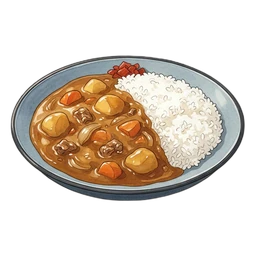
A plate of rice with thick Japanese curry sauce.
Before the first bite
- Spice
- Varies with sauce
- Texture
- Soft · Mixed textures
- Serving
- Usually individual
Varies by restaurantSauce base, heat level and toppings vary.
Taste and texture
Japanese curry rice brings rice and a thick curry sauce together on one plate. JNTO presents it as yoshoku, Western-influenced cooking developed in Japan. Meat and vegetables may be simmered in the sauce, or a fried topping added afterwards. Separating the sauce base from what sits on top makes a menu easier to understand.
Roux plays an important role in the thick texture. S&B’s basic recipe cooks flour in oil, mixes in curry powder, then combines the roux with broth from the meat and vegetables. Flour gives the sauce body beyond the flavour of spices dissolved in water. Strong spice aroma and a thick consistency are separate qualities to consider.
Curry simmered with vegetables contains soft, cooked pieces. S&B browns minced onion before cooking meat, potatoes and carrots. Small onion pieces blend into the sauce, while larger vegetables retain a distinct bite. Potatoes are not universal, so look at the description and photograph if you want a homestyle curry with chunky vegetables.
CoCo Ichibanya in Japan distinguishes sauce bases such as pork, beef and vegetable. That base shapes the whole plate before toppings are chosen. Adding meat on top is different from choosing a meat-flavoured sauce. Vegetables on the surface alone do not establish what the sauce contains; check its description when ingredients matter to you.
Omelet versions add egg over the rice. CoCo Ichibanya Korea lists examples with karaage, tomato and asparagus, or mushroom cream in a separate menu category. Soft egg changes each mouthful between rice and curry. Notice whether a dish simply changes its garnish or includes an omelet around the rice.
Curry udon is a separate noodle-and-broth dish. S&B describes thick curry-flavoured broth with dashi and soy sauce. CoCo Ichibanya Korea also distinguishes udon from curry rice and suggests adding rice to the remaining broth after the noodles. Choose according to whether you want rice and sauce from the outset or noodles followed by broth.
The first spoonful carries sauce clinging to grains of rice. S&B identifies flour starch as the source of thickening. Compared with a brothy noodle dish, more sauce stays against the rice. Alternating lightly coated rice with a saucier portion lets you enjoy different balances of plain rice and concentrated curry flavour.
Curry aroma is more than chilli heat. S&B highlights turmeric, coriander, fenugreek and cumin among the spices in its powder. Turmeric contributes colour and an earthy note, while cumin brings a pronounced aroma alongside the other spices. A lower heat level does not remove those aromas; enjoying spices and avoiding chilli intensity can be separate preferences.
Fried toppings add another texture. S&B’s cutlet curry combines fried pork and thick sauce, creating areas of crisp crust and others moistened by curry. A Korean menu example with cheese inside the pork cutlet adds a soft filling as well. Consider whether you want the sauce itself or additional meat and crust in each bite.
Use the restaurant’s own guidance for heat. CoCo Ichibanya Japan notes that mild options differ by sauce, and the Korean ordering guide also treats spice level as a separate choice. Dark sauce does not necessarily mean greater heat, nor does cheese establish a mild base. Check the topping and heat level independently.
When it may suit the table
- It suits a warm plate of rice and sauce. A plain version focuses on the curry, while egg or a fried topping shifts the texture towards softness or crunch. Consider it when you want spice aromas alongside rice.
When another path may fit better
- If meat and crust appeal more than curry sauce, consider a tonkatsu set meal. A cutlet in curry and a set with sauce added separately put different flavours at the centre. For a noodle craving, curry udon may be a better match.
How to order it in Korea
- CoCo Ichibanya Korea separates menu selection, extra toppings, rice portion and heat level. First check whether a dish is plain curry or already includes a topping, then review rice and spice choices. This is that brand’s ordering system; use each restaurant’s own menu rather than assuming identical options elsewhere.
Show the Korean nameName and a short phrase
Use this to point out the food or say its name. Check the food-specific ordering tips above first.
일본식 카레라이스
Save, share or print an image
More guides in this category
Checked sources
Reviewed 2026-09-06 · Next check 2027-03-06