hanip.me
Tendon (tempura rice bowl)
텐동
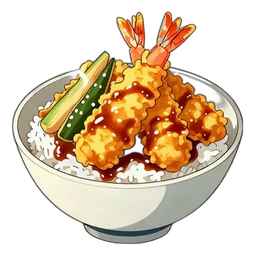
A Japanese rice bowl topped with shrimp and vegetable tempura and glazed with a sweet soy-based sauce.
Before the first bite
- Spice
- Not spicy
- Texture
- Crisp · Soft
- Serving
- Usually individual
Varies by restaurantThe tempura on top differs by shop — some lead with shrimp, others mix in vegetables. For dietary restrictions or allergies, ask the restaurant whether the food contains your trigger ingredients.
Taste and texture
Tendon is a Japanese rice bowl topped with shrimp or vegetable tempura and sauce. Its name combines tempura and donburi, meaning rice bowl. Unlike a separate plate of tempura, it brings fried toppings, rice and sweet-salty sauce together in one bowl.
One batter combines flour, cold water and egg. Flour is gently folded into the beaten liquid, sometimes leaving small lumps. Prolonged mixing develops gluten and can make a heavier, tougher coating, so fillings are prepared before mixing cold batter just before frying. Flowing batter forms thin, irregular edges rather than the coarse breadcrumb crust of tonkatsu.
Shrimp can be peeled, deveined and shallowly scored underneath to straighten them and reduce curling. Drying and lightly dusting before battering helps the coating adhere. Fine crisp projections surround the springy flesh. The elongated topping therefore reflects preparation as well as the original shrimp size.
Eggplant can be slit into connected strips and fanned open, increasing the coated surface and helping the flesh cook evenly. Its moist, soft interior contrasts with the crust. Carrot may be cut into thin matchsticks or rounds. Broad slices and clusters of narrow strips provide different proportions of coating and filling even with the same batter.
Tendon sauce may combine dashi, soy, mirin and sugar, with sake or powdered dashi in another recipe. Reducing a thinner dipping sauce makes it cling to tempura while seasoning rice; evaporation concentrates both flavour and consistency. This is separate from making the batter. The brown sheen over pale fried coating comes from the soy-based sauce.
Crisp batter surrounds tender fillings. Sweet-salty sauce flavors the tempura and rice.
Sweet potato and kabocha can be thinly sliced with skin retaining the edge and soft, sweet flesh inside. Lotus-root slices preserve their holes and a different bite. These denser fillings require different thickness and frying sequence from thin leaves. A vegetable assortment can therefore combine sweet, yielding pieces with firmer ones.
Shiitake or king oyster provides a thick centre, while enoki can be fried in small bunches held together with a nori band. Fine stems spread beyond the band. Coating only the back of a shiso leaf leaves its green face visible. Plump mushrooms, fine enoki strands and thin coated leaves create distinct textures beneath the batter.
Assembly may season rice first, then add tempura and more sauce, or briefly dip the tempura before setting it on rice. Drizzling leaves more uneven coverage; dipping coats a broader surface. Crisp tips coexist with softened, sauced areas. Rice underneath receives the sweet-savoury liquid, mixing plain grains with seasoned ones.
A rack drains fried pieces without stacking them. Small detached batter fragments, called tenkasu, are also skimmed out; one tendon recipe scatters some over rice. With no filling inside, they crumble differently from shrimp or vegetable tempura and can soften against hot rice and sauce. Large fillings, tiny fried fragments and seasoned grains contribute different-sized bites.
When it may suit the table
- You want something crisp eaten together with rice
- You need a one-bowl meal without any heat
When another path may fit better
- You'd rather avoid deep-fried food
- You're in the mood for something with broth
How to order it in Korea
- Look for “tendon” or the Korean wording for a tempura rice bowl on the menu.
- An assorted tendon can include several vegetable fritters alongside shrimp. If shrimp is your priority, check the number of shrimp and what other tempura is included. Since the toppings vary, the menu photo and ingredient list help more than the name alone.
Show the Korean nameName and a short phrase
Use this to point out the food or say its name. Check the food-specific ordering tips above first.
텐동
Save, share or print an image
More guides in this category
Checked sources
Reviewed 2026-09-13 · Next check 2027-03-10
- Japan Experience Opens in a new tab.
- Wikipedia Opens in a new tab.
- Namu.wiki Opens in a new tab.
- Food Safety Korea Opens in a new tab.
- Junko Ueda / Kikkoman Opens in a new tab.
- Namiko Hirasawa Chen / Just One Cookbook Opens in a new tab.
- Yumiko / RecipeTin Japan Opens in a new tab.
- Yuto Omura / Sudachi Opens in a new tab.