hanip.me
Yakisoba
야키소바
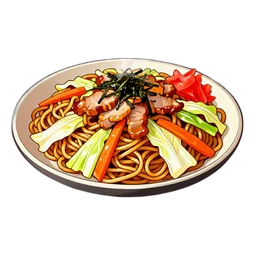
A Japanese stir-fried noodle dish of Chinese-style wheat noodles cooked with pork, vegetables and a Worcestershire-style sauce.
Before the first bite
- Spice
- Not spicy
- Texture
- Chewy · Mixed textures
- Serving
- Individual or shared
Varies by restaurantThe vegetables stir-fried in and the toppings vary by restaurant, and katsuobushi or Japanese mayonnaise may be added. For dietary restrictions or allergies, ask the restaurant whether the food contains your trigger ingredients.
Taste and texture
Yakisoba stir-fries Chinese-style wheat noodles with meat, seafood and vegetables, then seasons them with sauce. Soba here refers to wheat noodles rather than buckwheat noodles. Instead of sitting in broth or being dipped in sauce, the noodles and toppings are coated during cooking.
Pre-steamed yakisoba noodles are commonly used. Warming and gently loosening refrigerated noodles helps keep the strands intact as they mix with the other ingredients. Dry noodles are not cooked using sauce alone; loosening and frying prepared noodles are separate steps that affect the final texture.
Cabbage, onion, carrot and thin pork slices form a familiar combination. Just One Cookbook cooks the pork first, followed by onion and carrot, then cabbage and mushrooms. Adding firmer and quicker-cooking vegetables in stages keeps everything from becoming overly soft.
Shrimp is another option. Sauce maker Otafuku fries shrimp with cabbage, onion and carrot before adding noodles and finally yakisoba sauce. Shrimp contributes flavour and springy flesh in place of pork's richness. Squid, chicken and mushrooms are other possible additions.
Yakisoba sauce is sweet and savoury with some acidity. It may be a prepared sauce or a mixture: Just One Cookbook combines Worcestershire sauce, oyster sauce, ketchup, soy sauce and sugar. That is a home-made example, not a universal ingredient list or ratio for every product or restaurant.
A broad pan or griddle allows the ingredients to spread out. Overcrowding traps moisture and steam from vegetables and can leave the noodles wet. Loosening and frying the noodles before coating them in sauce adds roasted surface flavour rather than merely warming everything.
A thin coating delivers sweet-savoury flavour immediately, followed by Worcestershire-style acidity and seasoning. Meat or seafood adds flavour among the toppings. Sauce clinging to each strand determines intensity more than any quantity of broth.
The wheat noodles bend softly but retain some spring. Areas touching the pan can become more toasted and firm, without turning the entire dish into crisp noodle crackers. Loosened strands lift and separate with the toppings and take on sauce evenly.
Cooked cabbage releases sweetness and moisture while its thicker parts can retain crunch. Onion becomes softer and sweeter; thin carrot remains somewhat firmer. Picking up vegetables and meat with the noodles reveals their different sizes and textures between the soft strands.
Aonori adds green-seaweed aroma, and bonito flakes bring dried-fish savouriness. Beni shoga, red pickled ginger, is sharp and tangy against the rich sauce. Mayonnaise adds a creamy richness, so toppings affect both the initial flavour and finish.
Yakisoba also fills yakisoba bread rolls and egg-wrapped omusoba, or forms a layer in Hiroshima-style okonomiyaki. Bread absorbs sauce, egg softly encloses the noodles, and a griddle-cooked noodle layer adds spring among cabbage and batter.
When it may suit the table
- Choose it for noodles and stir-fried toppings without broth, combining sauced strands with cabbage and meat or shrimp.
- It suits a craving for a sweet, tangy sauce alongside saltiness. Choose pork or seafood according to the toppings you enjoy.
When another path may fit better
- Choose another noodle dish if you want hot broth. Moisture from the vegetables does not turn this stir-fry into a soup.
- If you need to avoid wheat noodles, do not choose it based on the word soba: the standard noodles are wheat-based, regardless of toppings or sauce.
How to order it in Korea
- Look for “yakisoba” on the menu; despite the name it uses Chinese-style wheat noodles, not buckwheat soba.
- Bonito flakes add fish savoriness, aonori adds seaweed aroma, and pickled ginger adds tangy ginger flavor. Mayonnaise can make the sauce taste richer. If there is an aroma you dislike, ask which toppings are used and whether they can be omitted or served separately.
Show the Korean nameName and a short phrase
Use this to point out the food or say its name. Check the food-specific ordering tips above first.
야키소바
Save, share or print an image
More guides in this category
Checked sources
Reviewed 2026-08-25 · Next check 2027-04-28