hanip.me
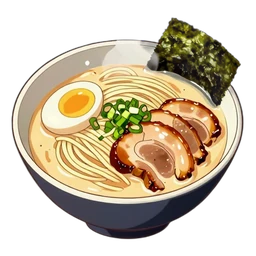
Tonkotsu ramen
돈코츠 라멘
A Japanese ramen served in a cloudy broth made by boiling pork bones for a long time.
Before the first bite
- Spice
- Not spicy
- Texture
- Brothy · Chewy
- Serving
- Usually individual
Varies by restaurantToppings such as chashu, kikurage and sesame seeds differ by shop, and some add a spicy seasoning for heat. For dietary restrictions or allergies, ask the restaurant whether the food contains your trigger ingredients.
Taste and texture
Tonkotsu ramen is Japanese ramen in a cloudy pork-bone broth. Hakata-style versions use thin, straight noodles.
Tonkotsu identifies pork bones as the broth ingredient, rather than the seasoning. Pork-bone broth can be seasoned with soy sauce; Hakata versions may use salt or light soy sauce. Tonkotsu and shoyu can therefore describe the same bowl. A white broth does not necessarily mean it contains only salt.
Hakata-style noodles are notably thin, straight and relatively low in dough hydration. When cooked firm, their slender strands retain a distinct resistance at the centre. Their texture changes as they sit in the broth, which helps explain serving additional freshly cooked portions. This describes Hakata style, rather than every tonkotsu ramen.
Chashu is prepared separately from the bones used for broth. Japanese versions can be pork belly slowly braised with soy sauce, sugar and cooking alcohol, either rolled and tied or left flat. A round slice may come from that shaping. Despite the related name, its preparation need not match Chinese roasted char siu: the ramen topping may be tender braised pork.
Egg toppings are not all prepared alike. Ajitama are boiled eggs marinated in a soy-and-mirin mixture so the whites take on seasoning. ICHIRAN's US menu instead includes a lightly salted soft-boiled egg served in its shell. An egg is not automatically a soy-marinated ajitama, and this overseas menu example does not establish what a Korean location serves.
Vigorous simmering disperses pork fat into the broth, making it cloudy and rich. Hakata-style ramen uses thin, straight noodles with a distinct bite in that broth. Consider whether you enjoy the pork aroma and the richness.
The pale opacity develops during prolonged, vigorous cooking of pork bones as fat and other components disperse into the liquid. Bone selection and cooking time affect pork aroma and mouthfeel. This differs from producing a clear stock. Colour alone, however, does not establish thickness or saltiness; those are separate qualities to taste.
Pork-belly chashu has alternating lean and fatty layers, giving different resistance within one slice. Slow-braised, thinly sliced meat feels different in broth from firm grilled meat. Its sweet-salty braising seasoning is already in the pork, so a bite of chashu need not taste as salty as a spoonful of broth; the topping has its own flavour.
Soy-marinated eggs contrast springy whites with yolks of varying doneness. A runny or jammy yolk adds softness beside noodles and broth, while a more cooked egg has a firmer centre. Because seasoning enters from the outside, sweet-salty flavour may be clearest in the white. Soft-boiled describes doneness; marinated describes seasoning.
Garnishes add contrasting textures and aromas: chopped scallions are fresh and pungent, while thin wood-ear mushrooms retain a crisp resistance. Red pickled ginger described in Hakata ramen contrasts with pork-bone aroma; sesame and garlic add other aromatic notes. These ingredients play different roles alongside the broth and noodles.
Kaedama adds freshly cooked noodles to the broth left in the bowl, rather than simply enlarging the original serving. It should not be understood as a new bowl with replacement broth. It restores the texture of newly cooked noodles instead of leaving one large portion soaking throughout the meal. Availability and portion size vary, and a noodle refill does not imply extra meat or egg.
When it may suit the table
- You want a rich, heavy broth
- You want a single bowl to finish alone
When another path may fit better
- You need something lighter and less fatty
- You'd rather eat rice without broth
How to order it in Korea
- Look for “tonkotsu ramen” on the menu and don't confuse it with the shop's shoyu or miso ramen.
- If noodle firmness is adjustable, say whether you prefer firm or soft noodles. Kaedama adds noodles to the broth you have left; it is not another complete bowl. Leave some soup if you plan to order it, and check whether the shop offers it.
Show the Korean nameName and a short phrase
Use this to point out the food or say its name. Check the food-specific ordering tips above first.
돈코츠 라멘
Save, share or print an image
More guides in this category
Checked sources
Reviewed 2026-09-13 · Next check 2027-02-24