hanip.me
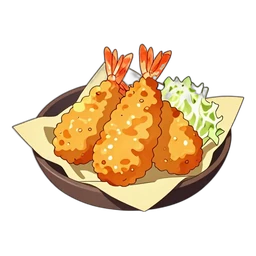
Fried shrimp
새우튀김
Shrimp tempura is prawn coated in tempura batter and deep-fried, known in Japan as ebi tempura.
Before the first bite
- Spice
- Not spicy
- Texture
- Crisp · Tender
- Serving
- Individual or shared
Varies by restaurantSome places serve ebi furai instead, a breaded version that comes out darker and crunchier. For dietary restrictions or allergies, ask the restaurant whether the food contains your trigger ingredients.
Hanip treats shrimp tempura as a challenge food. Reading this guide does not make it appear in ordinary recommendations.
Taste and texture
Shrimp tempura is prawn that is battered and deep-fried. Japan keeps two dishes apart: ebi tempura, which is battered, and ebi furai, which is breaded, since tempura is never coated in breadcrumbs.
Elongated fried shrimp are shaped during preparation. After peeling while leaving the tail and removing the vein, shallow belly cuts allow the flesh to be gently straightened, limiting curling. Tail tips can be trimmed or pressed to remove retained moisture. A light flour dusting helps liquid batter adhere evenly. The straight form is easier to hold and bite from one end and helps maintain a more even coating along the body.
One tempura batter lightly combines cold water, egg and flour. Egg and water are mixed first, then flour is briefly incorporated rather than beaten smooth; small lumps can remain. Batter is prepared near frying time and excess is allowed to drip from the shrimp, leaving a relatively thin layer. Unlike kneaded bread dough, the aim is a light crust with small gaps around moist, tender shrimp.
Prepared tempura flour may require a different method from plain flour and egg. Nisshin’s product recipe mixes its flour with water until smooth, so adding egg or deliberately undermixing does not apply universally. Seafood is drained and lightly dusted with flour first. Vegetables and seafood are fried separately before sharing a plate. Batter formulation and preparation influence adhesion and surface texture.
Ebi fry applies flour, egg and panko in successive layers rather than one liquid batter. Coarse, airy panko creates rough projections that crumble distinctly after frying. Just One Cookbook double-dredges in flour and egg before adding breadcrumbs. Compared with thin, irregular tempura batter, individual crumbs are visible and colour more deeply. Both can use straightened shrimp, but their coating ingredients and application create different kinds of crunch.
Hanaage creates flower-like fragments around shrimp by attaching small pieces of batter in the oil, increasing the volume of crisp coating. Shrimp tempura can also top tendon rice bowls or soba and udon soups. Submerged coating softens, while parts above the liquid may retain crisp fragments. A separate plate and a noodle topping expose different areas of the same fried shrimp to liquid.
Another battered variation is fritto misto with shrimp, squid and vegetables. Nisshin’s recipe supervised by chef Watanabe mixes tempura flour with beer or sparkling water and chopped flat-leaf parsley. Drained seafood, courgette and peppers are battered and fried, then served with lemon. Parsley appears inside the coating rather than solely as a garnish. Beer batter is presented as a flavourful, airy variation, distinct from plain batter or panko around the same shrimp filling.
The coat is light and fluffy with a crisp bite while the prawn inside stays tender. It is eaten with a soy-based dipping sauce or with salt.
Panko-coated shrimp can be served with tartar or tonkatsu sauce. Just One Cookbook combines chopped cooked egg, onion and pickle with mayonnaise and lemon. Small egg-white and vegetable pieces remain within the soft mayonnaise, contrasting with rough crumbs. Pickle and lemon add acidity, onion crunch and aroma. The recipe also suggests shredded cabbage, tomato and lemon. Sauced areas feel different from dry, crumbling breadcrumb areas.
Tentsuyu can combine dashi, soy sauce, mirin and sugar into a thin sweet-savoury dip. Grated daikon adds fine particles, with grated ginger another accompaniment. Coating touched by the liquid absorbs it and softens, unlike a dry bite. Salt adds seasoning without liquid. These approaches therefore change both seasoning and how much crispness remains.
When it may suit the table
- A day you want one or two crisp fried bites
- You are in the mood for a dish built around prawn
When another path may fit better
- Deep-fried food feels too heavy today
- You need to avoid crustaceans
How to order it in Korea
- Look for “shrimp tempura” on the menu, then check whether it is battered tempura style or a breaded fry.
- Ask how many shrimp come in a portion and whether it is served with salt or a soy-based dipping sauce.
Show the Korean nameName and a short phrase
Use this to point out the food or say its name. Check the food-specific ordering tips above first.
새우튀김
Save, share or print an image
More guides in this category
Checked sources
Reviewed 2026-08-25 · Next check 2027-03-17