hanip.me
Tempura
덴푸라
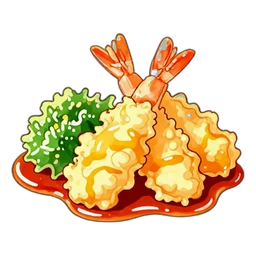
Tempura is seafood and vegetables dipped in a light batter and briefly deep-fried in hot oil.
Before the first bite
- Spice
- Not spicy
- Texture
- Crisp · Soft
- Serving
- Individual or shared
Varies by restaurantThe mix of shrimp, fish and vegetables varies by restaurant, and tempura is also served on soba or udon, or over rice as a bowl. For dietary restrictions or allergies, ask the restaurant whether the food contains your trigger ingredients.
Hanip treats tempura as a challenge food. Reading this guide does not make it appear in ordinary recommendations.
Taste and texture
Tempura coats seafood or vegetables in a light flour batter and deep-fries them. Unlike breadcrumb-coated foods, its surface has no bread flakes; the batter cooks into a thin, irregular layer. Fish, mushrooms, roots and leafy vegetables can join shrimp in an assortment.
Flour and cold water form the basic batter, often with egg. Kikkoman uses cake flour and advises minimal mixing, while Just One Cookbook gives an all-purpose-flour example. Despite flour differences, both aim for a lightly combined batter rather than kneading it like elastic bread dough.
Overmixing develops stickiness that makes a crisp coating harder to achieve. That is why small flour lumps can remain and the batter is prepared just before frying. As the thin coating cooks in hot oil, the ingredient inside cooks while retaining moisture.
Thickness and preparation matter as much as the batter. Firm kabocha and sweet potato are sliced thinly; eggplant can be slit and fanned out, and tough shiitake stems removed. Different sizes and shapes help the interior cook before the crust is finished.
Shrimp can be peeled, deveined and given shallow cuts on the underside before being straightened. Long, straight shrimp tempura reflects this preparation rather than naturally emerging from the fryer that way. Drying ingredients and dusting them lightly with flour helps the batter adhere.
Mixtures also vary. Tim Anderson's vegetable tempura published by JNTO combines flour, cornstarch and sparkling water without egg. Small loose ingredients such as corn kernels can be gathered in batter and fried as kakiage, forming a fritter instead of individually coated pieces.
The pale coating breaks delicately, while the ingredients retain different textures: shrimp is springy, white fish separates into flakes, and sweet potato or kabocha is fluffy and sweet. The pleasure comes from tasting each ingredient beneath the crisp shell.
Eggplant and mushrooms become moist and tender inside. Lotus root retains a firmer bite around its perforated cross-section, while thin shiso leaves contribute fragrance and a light crunch. The vegetable's structure and moisture matter even when the batter is identical.
Adding too many pieces lowers the oil temperature and changes the crust. The recipes examined advise frying in batches and removing loose crumbs. Draining fried pieces on a rack also matters: retained moisture and excess oil weaken the crispness.
Tentsuyu combines dashi with soy sauce and mirin. This light, savoury dip soaks into the coating, adding saltiness and gentle sweetness. Grated daikon brings moisture and ginger adds sharpness. Dipping a portion briefly rather than soaking the whole piece preserves both crisp and softened areas.
Salt keeps the coating dry and lets the ingredient and crust taste more directly. Tempura served over rice as tendon, or in udon or soba broth, absorbs liquid where it touches the sauce or soup. The same fried item therefore changes texture differently as a separate dish or a rice or noodle topping.
When it may suit the table
- Choose it for a delicate crust close to warm ingredients, rather than the coarser crunch of a thick breadcrumb coating.
- An assortment lets you alternate sweet potato, moist mushrooms and springy shrimp or fish in small portions.
When another path may fit better
- Choose steaming or roasting if you do not want fried food. A thin, pale coating still belongs to a deep-fried dish.
- A tempura-only plate may not suit a craving for soup. For noodle combinations, check whether the tempura sits in the broth or comes separately.
How to order it in Korea
- Look for “tempura” on the menu and check whether it is an assortment of seafood and vegetables or a single ingredient.
- Ask whether it can come over soba, udon or rice, which turns it into a full meal.
Show the Korean nameName and a short phrase
Use this to point out the food or say its name. Check the food-specific ordering tips above first.
덴푸라
Save, share or print an image
More guides in this category
Checked sources
Reviewed 2026-08-25 · Next check 2027-04-28