hanip.me
Onigiri
오니기리
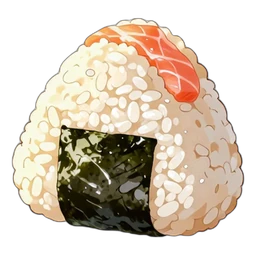
A Japanese rice ball of white rice pressed into a triangle or cylinder and wrapped in nori.
Before the first bite
- Spice
- Not spicy
- Texture
- Sticky glaze · Soft
- Serving
- Usually individual
Varies by restaurantFillings range from salted salmon and umeboshi to katsuobushi and mentaiko, and the selection differs by shop. Many of the fillings counted as traditional are seafood. For dietary restrictions or allergies, ask the restaurant whether the food contains your trigger ingredients.
Taste and texture
Onigiri is a Japanese rice ball, shaped into a triangle or a rounded form. It may contain a filling or be wrapped in nori, and is also called omusubi. Unlike sushi, it is not based on vinegar-seasoned rice; the seasoning of the filling accompanies the sticky white rice.
Short-grain rice holds together while retaining individual grains. It can be shaped while warm by hand or mould, with wet hands reducing sticking. For a triangle, one hand supports thickness and the other forms corners as it turns. Pressure should hold the rice together without packing it hard. Flattened rounds and cylinders are other shapes determined by shaping as well as rice choice.
A central filling sits in a hollow in the rice before more rice closes it. Grilled salmon is flaked; umeboshi flesh is separated from its hard stone. Outer rice remains relatively plain while salt or acidity concentrates near the centre. Salmon retains fine flakes, whereas plum flesh softens into a tart bite. The central placement changes the balance between edge and middle bites.
Tuna mayo drains canned tuna and mixes the flakes with mayonnaise. One recipe adds soy and toasted sesame; another cooks minced onion with butter before combining it with tuna and mayo. Mayonnaise binds the loose fish. A smooth fish filling therefore differs from one with soft onion pieces or sesame grains in both texture and aroma.
Okaka moistens bonito flakes with soy. It can fill the centre, or be mixed throughout warm rice before shaping, distributing aroma and visible flakes among the grains. Another form uses takikomi gohan cooked with meat and vegetables, flavouring the rice during cooking. Timing and placement therefore change how seasoning is distributed from the first bite to the centre.
Soft, sticky rice is flavored by salty or tangy fillings. A seaweed wrapping adds a sea-like aroma.
Nori may cover both triangular faces or form a narrow band. Contact with rice moisture reduces crispness and can make it soft and chewy as it clings. Wrapping just before eating preserves an initial brittle bite followed by sticky rice. A separating film slows moisture transfer. Coverage and timing affect both the grip and whether the wrapper snaps or stretches with the rice.
Yaki onigiri grills shaped rice into a thin crisp crust. One method browns its faces before brushing on soy seasoning and heating again. Rice may be pre-seasoned with soy, sesame oil and sugar or left plain. The exterior grains form a crisp layer while the centre stays soft. Low heat finishes the glaze, which scorches readily; the contrast works even without a filling.
Miso yaki onigiri coats the surface with miso, sugar and mirin. One version mixes shredded shiso and toasted sesame through rice shaped into flat rounds, grills both faces and briefly cooks the glaze. Leaf aroma and sesame grains remain inside, while the exterior carries concentrated fermented-soy flavour. The thicker paste layer differs from soy glaze, with sweetness and salt adjusted to the miso.
Onigirazu spreads rice on nori, layers fillings such as ham and cheese or egg and vegetables, and folds the wrapper into a square. Cutting reveals the layers; salmon with cream cheese or egg with bacon are other examples. Broad fillings are held by folded nori rather than hidden in a small central pocket, creating a larger layered cross-section where each ingredient’s thickness is apparent.
When it may suit the table
- When you want to pick a few with different fillings
- You're eating on the move rather than sitting down
When another path may fit better
- You want a full meal rather than a light bite
- You'd rather have something warm with broth
How to order it in Korea
- Look for “onigiri” on a Japanese menu or in a convenience store chiller, where it may sit next to Korean triangle rice balls.
- Choose by the filling name, such as salmon, umeboshi or pollock roe. Grilled salmon brings savory fish flavor, while umeboshi has the pronounced sourness of pickled plum. Identically shaped triangles can have very different fillings, so check the label before the shape.
At the restaurant
- For convenience-store versions, follow the opening order printed on the wrapper to release the rice and seaweed neatly.
Show the Korean nameName and a short phrase
Use this to point out the food or say its name. Check the food-specific ordering tips above first.
오니기리
Save, share or print an image
More guides in this category
Checked sources
Reviewed 2026-09-13 · Next check 2027-03-10
- Wikipedia Opens in a new tab.
- Food Safety Korea Opens in a new tab.
- Namu.wiki Opens in a new tab.
- Encyclopaedia Britannica Opens in a new tab.
- Namiko Hirasawa Chen / Just One Cookbook Opens in a new tab.
- Yumiko / RecipeTin Japan Opens in a new tab.
- www.kikkoman.com Opens in a new tab.
- Ministry of Agriculture, Forestry and Fisheries, Japan Opens in a new tab.