hanip.me
Risotto
리소토
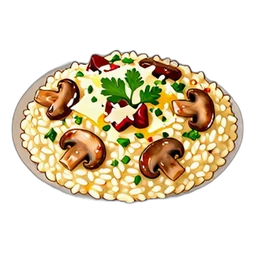
An Italian rice dish cooked with broth, added gradually and stirred, until it reaches a creamy consistency.
Before the first bite
- Spice
- Not spicy
- Texture
- Soft · Chewy
- Serving
- Usually individual
Varies by restaurantThe broth can be derived from meat, fish or vegetables, and regional versions differ, such as risotto alla milanese, which uses saffron for flavour and its signature yellow colour. For dietary restrictions or allergies, ask the restaurant whether the food contains your trigger ingredients.
Hanip treats risotto as a challenge food. Reading this guide does not make it appear in ordinary recommendations.
Taste and texture
Risotto is an Italian rice dish cooked with gradually added stock, forming a creamy base around the grains. Butter and cheese are familiar additions, but starch from the rice is also important. Rather than pouring a separate cream sauce over cooked rice, the rice and its surrounding sauce develop together in the pan as dry grains absorb stock.
Arborio, Carnaroli and Vialone Nano are among the varieties used for their ability to absorb liquid and create creaminess. Because surface starch contributes to cooking, the method skips the repeated rinsing familiar from some other rice preparations. A spoonful retains grains bound by a moist surrounding layer.
Great Italian Chefs begins by softening onion without browning, then adding and briefly cooking the rice. White wine is reduced before hot stock is added a ladle at a time. The softened onion forms an aromatic base instead of coarse raw pieces. Cooking the rice with fat and then gradually introducing liquid are successive stages of the dish.
A finishing step called mantecatura mixes butter and grated cheese into the cooked rice off the heat. They blend with the rice and cooking liquid, adding smoothness and gloss rather than remaining large cheese chunks. GialloZafferano's saffron recipe also finishes with butter and Grana Padano.
Different ingredients change the flavour absorbed by the rice. Saffron adds infused aroma and yellow colour, while mushrooms emphasise mushroom fragrance. Squid-ink risotto and versions with peas, tomatoes or beetroot offer further examples. In seafood risotto, both pieces and stock shape the taste, so an ingredient name can describe flavour within the rice as well as a garnish.
A well-cooked risotto can flow slowly from a spoon while retaining resistance at the centre of its grains. Smoothness comes first, followed by the rice yielding as it is bitten. Al dente describes that central bite. Distinct grains and a creamy surrounding layer coexist instead of becoming a uniform porridge.
As stock is added and the rice is stirred, released starch thickens the cooking liquid. This produces creaminess even without cream. A loose risotto spreads slowly on a plate rather than forming a firm mound. Take the surrounding sauce with the grains instead of trying to lift out only rice.
Stock determines the base flavour even though it is not a visible topping. Chicken, meat, vegetable and fish stocks contribute different aromas. A mushroom label describes one ingredient; the broth remains a separate part of its composition. Visible pieces and cooking liquid both contribute to the taste.
Saffron flavours the grains and their surrounding liquid. GialloZafferano infuses the threads in water before adding them to distribute colour and aroma. Butter and cheese provide dairy richness beneath that fragrance. Saffron yellow does not itself signal chile heat, though pepper or other seasonings can vary.
Mushrooms add pieces to bite among the rice, while peas add small rounded shapes and sweetness. A little lemon zest, used in some recipes, brings citrus aroma alongside butter and cheese. Try a spoonful with a few pieces instead of mashing everything together: the grains and additions remain perceptible even when the ingredients are finely cut.
When it may suit the table
- It suits a craving for warm, moist rice, with a creamy base and distinct grains in the same spoonful.
- Choose it for butter and grated cheese blended into rice, with options such as saffron or mushroom for a featured aroma.
When another path may fit better
- Ask about the finishing ingredients if avoiding butter or cheese. A recipe without cream can still contain dairy.
- A more thoroughly softened rice dish may suit a dislike of firm-centred grains. Risotto combines a creamy surrounding layer with a perceptible rice bite.
How to order it in Korea
- Look for “risotto” on the menu and check which ingredients go in, such as mushroom or seafood.
- Ask whether the broth is made from meat, fish or vegetables, and whether butter and cheese are used.
Show the Korean nameName and a short phrase
Use this to point out the food or say its name. Check the food-specific ordering tips above first.
리소토
Save, share or print an image
More guides in this category
Checked sources
Reviewed 2026-08-25 · Next check 2027-04-21