hanip.me
Paella
빠에야
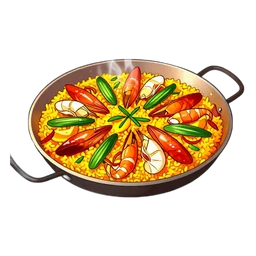
A rice dish from the Valencia region of Spain, cooked in a wide, shallow pan and coloured yellow with saffron.
Before the first bite
- Spice
- Mild
- Texture
- Soft · Crisp
- Bones
- Depends on the style
- Serving
- Usually shared
Varies by restaurantTurmeric or paprika may stand in for saffron as the colouring, and the rice cultivar varies between bomba and senia. For dietary restrictions or allergies, ask the restaurant whether the food contains your trigger ingredients.
Hanip treats paella as a challenge food. Reading this guide does not make it appear in ordinary recommendations.
Taste and texture
Paella cooks rice with meat or seafood, vegetables and cooking liquid in a broad, shallow pan. Unlike mixing toppings into cooked rice and frying it, the rice absorbs surrounding flavours as it cooks. It is central to the dish, not merely a base beneath prawns or meat. Spoonfuls combine grains and toppings from the spread-out pan.
A representative Valencian version uses chicken, rabbit, beans and tomato. Valencia's tourism accounts emphasise this meat-and-vegetable composition, although seafood and mixed versions also exist. An absence of prawns and mussels therefore does not mean something is missing. A specified style in the menu helps identify the composition.
The rice absorbs cooking liquid while retaining distinct grains. Valencia's guidance names round varieties such as Bomba, Senia and Albufera. Spanish Sabores' example cooks meat and vegetables, adds water to develop the cooking liquid, then adds rice. A separately prepared stock is not the only route: ingredients and water can form the liquid in the pan.
Browning meat prepares flavour for the rice. Tomato and water subsequently incorporate browned material from the pan, and rice cooks in that liquid. Paprika and saffron contribute aroma and colour. Yellow rice alone cannot establish the saffron quantity, although recipes using it include its aroma as part of the dish.
Seafood versions change the rice through shellfish and their cooking liquid. Related Valencian rice dishes include arroz del senyoret with cleaned, shelled seafood. Similar pans may consequently require removing meat from bones, peeling shells or simply spooning up ready-to-eat pieces. The actual toppings explain the eating experience better than pan shape alone.
Rice carries the cooking liquid's flavour without aiming to dissolve into porridge. Individual grains remain, carrying meat, vegetable and spice flavours as you chew. It differs from brothy rice or a creamy risotto. Its character depends on rice spread through the pan and the amount of liquid used to cook it.
Spanish Sabores leaves the distributed rice undisturbed rather than continually stirring it. Unlike tossing fried rice, the grains stay in place: those below contact the pan's heat while others cook in surrounding liquid. Texture can therefore differ between the surface and bottom.
The thin toasted rice layer on the base is called socarrat. When formed well, it is crisp and savoury against the softer rice above. It does not occur in an identical thickness in every paella, and blackened bitterness is different. Try some with softer rice to experience it within the whole dish rather than eating only crust pieces.
Beans add another bite to a Valencian version. Flat green beans retain a vegetable texture while large white beans can feel flourier. Meat is firmer than rice; prawns and mussels provide different springiness in seafood versions. Small combined spoonfuls let these contrasts follow naturally instead of leaving all toppings until the end.
Saffron and paprika aromas do not necessarily mean sharp chilli heat. Sweet paprika in a recipe serves a different purpose from hot chilli powder, layering aroma through meat, tomato and rice. Seafood cooking liquid and toppings produce a different impression from meat versions despite similar yellow rice. If lemon is provided, try a little on one side before dressing everything.
When it may suit the table
- It suits sharing a pan of rice and toppings. Distribute both together so that one person does not receive only rice or only the concentrated toppings.
- Choose it for rice carrying saffron and other seasoning aromas, with flavour absorbed during cooking rather than sauce added only on top.
When another path may fit better
- For a quick individual meal, check order size and cooking time. Pan size and portions are not fixed by the dish name, so availability of a small serving depends on the menu.
- If you dislike handling bones or shells, check the toppings. Chicken or rabbit may be bone-in, and seafood may retain shells; ask whether it is ready to eat by the spoonful.
How to order it in Korea
- Look for Paella and ask whether it is meat- or seafood-based. If described as Valencian, examine whether it uses chicken, rabbit and beans.
- Check the meat or seafood included and the minimum number of portions.
Show the Korean nameName and a short phrase
Use this to point out the food or say its name. Check the food-specific ordering tips above first.
빠에야
Save, share or print an image
More guides in this category
Checked sources
Reviewed 2026-08-25 · Next check 2027-04-14