hanip.me
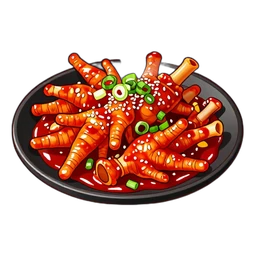
Dakbal · Korean spicy chicken feet
닭발
Dakbal is chicken feet cooked with a spicy seasoning, known above all for its distinctive chewy texture.
Before the first bite
- Spice
- Hot
- Texture
- Chewy
- Bones
- Depends on the style
Varies by restaurantBone-in, boneless, brothy and stir-fried versions are eaten differently. For dietary restrictions or allergies, ask the restaurant whether the food contains your trigger ingredients.
Hanip treats dakbal as a challenge food. Reading this guide does not make it appear in ordinary recommendations.
Taste and texture
Dakbal is seasoned, cooked chicken feet, served in forms such as bone-in, boneless or with broth.
Bone-in feet retain their shape, and the edible parts are removed from around the bones. Boneless feet use deboned pieces for easier eating. Both retain moist resilience beneath the sauce, but differ in the work of removing bones. One braised style steams prepared feet before cooking them further with vegetables and seasoning. They soften while keeping their characteristic chew. A bone-in soup recipe first boils the feet, then simmers them in seasoned broth until the edible parts separate readily.
A red seasoning can combine fermented gochujang with gochugaru. The paste provides body, while chili flakes add aroma and heat. Soy sauce and sugar contribute saltiness and sweetness, with garlic and ginger supplying aromatics. Seonkyoung Longest’s version also uses cooking wine and oyster sauce, with hotter chilies optional. A blended sauce coats the contours of steamed feet. The proportions of paste, flakes and fresh chili affect both heat and the texture of the coating.
Brothy dakbal simmers prepared feet with red seasoning and water or stock. Tturu’s recipe combines gochujang and chili flakes with doenjang, soy sauce and oyster sauce, plus puréed onion that disperses rather than remaining in large pieces. Sugar and plum syrup add sweetness; minced garlic and ginger add aroma. Scallion and pepper finish this version. Unlike a coating on stir-fried feet, seasoned liquid remains around the pieces and can be spooned alongside them.
Soybean sprouts introduce long stems and beans between the feet in a brothy version, an optional addition also described by the Korea Tourism Organization. Mamangju blanches them separately before adding them to the seasoned broth for further cooking, along with sliced perilla leaves and chopped chili. Slender sprout stems contrast with the thicker resilient feet; perilla softens and folds into the liquid. This combination offers more vegetable pieces and broth alongside the feet than a plate simply stir-fried in sauce.
It is usually sweet and spicy with a springy, chewy texture. Broth versions include seasoned liquid to eat with it.
Grilling after seasoning adds a roasted aroma. Seonkyoung Longest coats steamed feet and finishes them on a grill or under a broiler, with an oiled-pan stir-fry as another option. Sauce clings to the surface and darkens in places, giving a roasted character distinct from moist broth-cooked seasoning. Sesame oil, sesame seeds and scallion can finish the dish with nutty and onion aromas. Roasting and a generous broth offer different surface flavours and degrees of moisture.
Well-cooked feet soften but retain resilience rather than falling apart like very tender meat. The Korea Tourism Organization likewise describes long-cooked braised feet as tender yet distinctly chewy. Moist seasoning reaches the mouth first, followed by the resistant bite. Bone-in feet involve removing edible parts around small bones; boneless pieces reduce that work, making sauce and chew easier to focus on. In a thoroughly simmered version, both ease of separation from bone and remaining elasticity matter. Choosing boneless changes the handling while retaining the characteristic texture.
Chili seasoning spreads through the liquid to coat sprouts and perilla as well as the feet. Reduction leaves a greater proportion of sauce between the pieces; more broth leaves more liquid to spoon up. Mamangju adds fresh chili to a chili-flake, gochujang and sugar seasoning and continues reducing after adding sprouts. Heat, sweetness, perilla aroma and sprout stems meet in one pot. The clinging sauce on the feet and broth held by vegetables give the same seasoning different textures.
The Korea Tourism Organization presents steamed egg and rice balls as accompaniments to brothy dakbal. Soft, spoonable egg changes the texture between chewy pieces. Rice balls contain clustered grains that take up a little seasoned broth between them. Chewy feet, soft egg and rice grains create distinct components. Brothy versions provide liquid for the rice, while a stir-fried version can be eaten with rice and the sauce clinging to the feet.
When it may suit the table
- You actively want spicy seasoning and a long, chewy bite
- You want spicy dakbal with steamed egg or rice balls on the side
When another path may fit better
- Working around bones or chewing a resilient texture feels unappealing
- You need to avoid strong heat or want something gentler
How to order it in Korea
- Look for “dakbal,” then ask whether it is bone-in, boneless, or “gungmul dakbal,” the brothy style.
- Ask the restaurant how hot its version is, and consider steamed egg or rice balls on the side for a first try.
Show the Korean nameName and a short phrase
Use this to point out the food or say its name. Check the food-specific ordering tips above first.
닭발
Save, share or print an image
More guides in this category
Checked sources
Reviewed 2026-08-24 · Next check 2027-05-12